
Home care ·
Check the alarms.
One useful weekend check. Test, date, coverage.
Explore the takeaways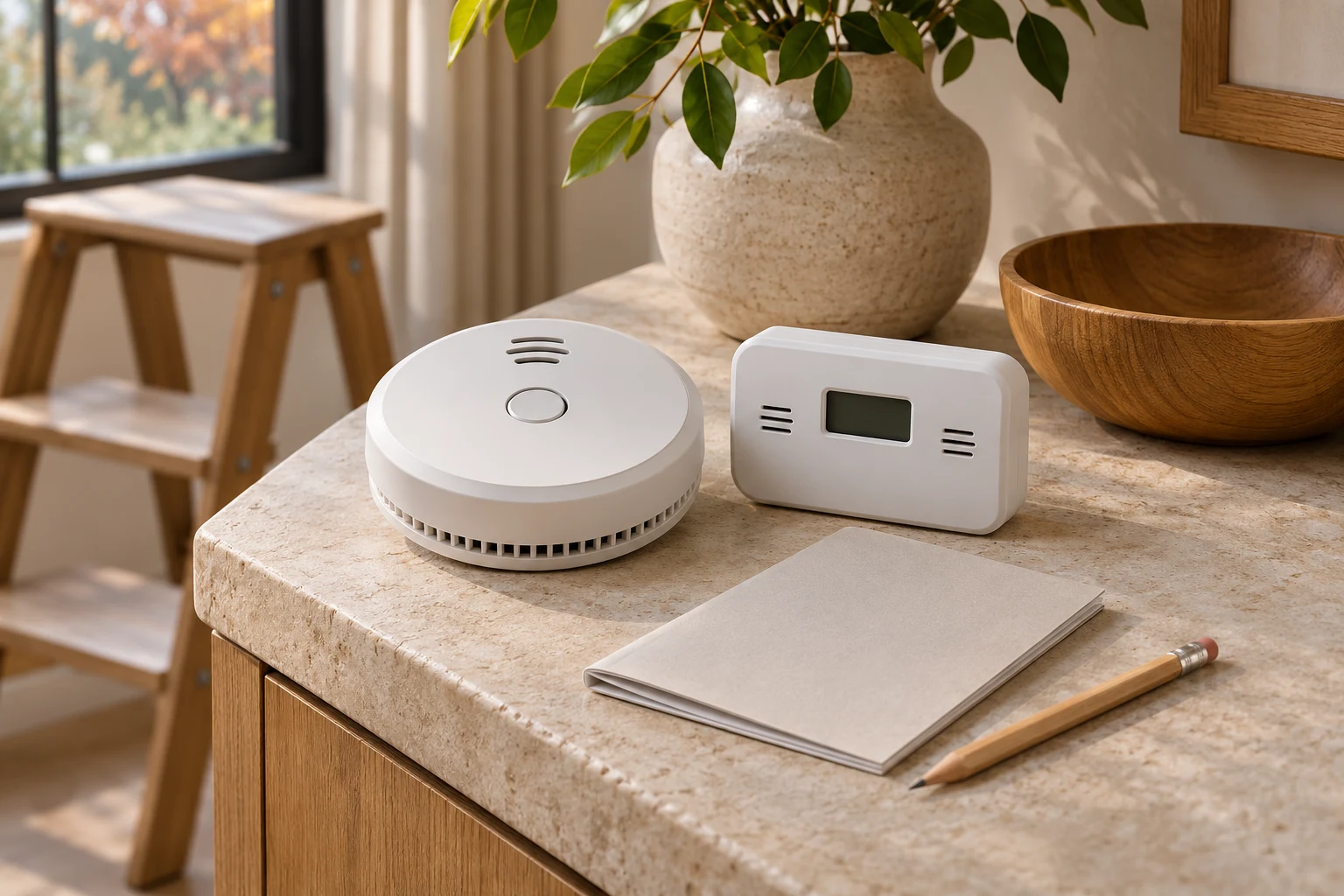
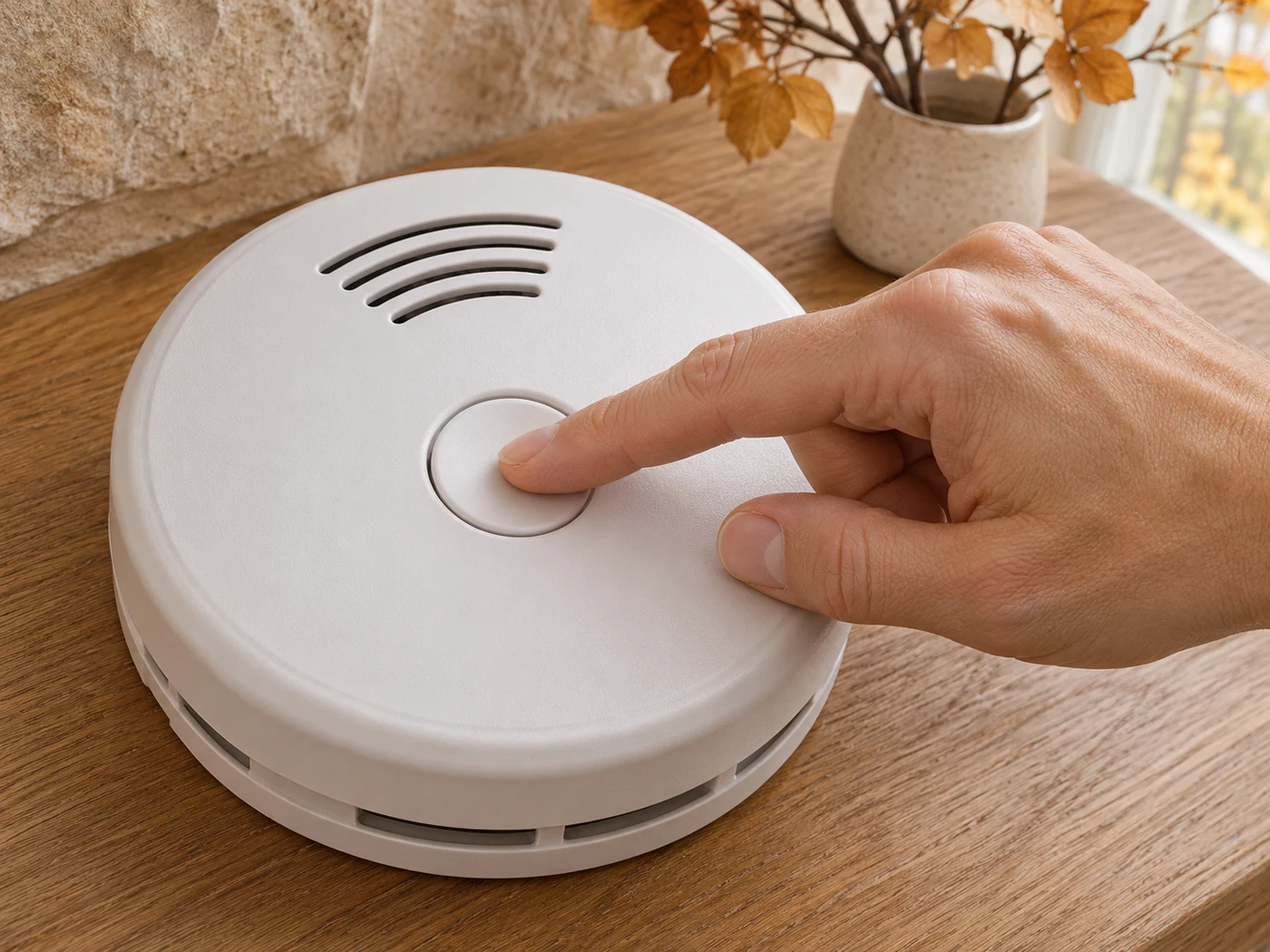
Test monthly.
Use the test control on smoke and CO alarms as the manufacturer directs.
Read the detailsClose the details
Test both types each month.
U.S. Fire Administration guidance calls for monthly smoke-alarm tests. CPSC also recommends testing carbon-monoxide alarms monthly. Use the test control as the manufacturer directs and make sure the household recognizes the warning. [1][3]
A CO alarm’s test button checks its circuitry, not the accuracy of its sensor. A successful button test does not replace maintenance or the product’s replacement instructions. [2]
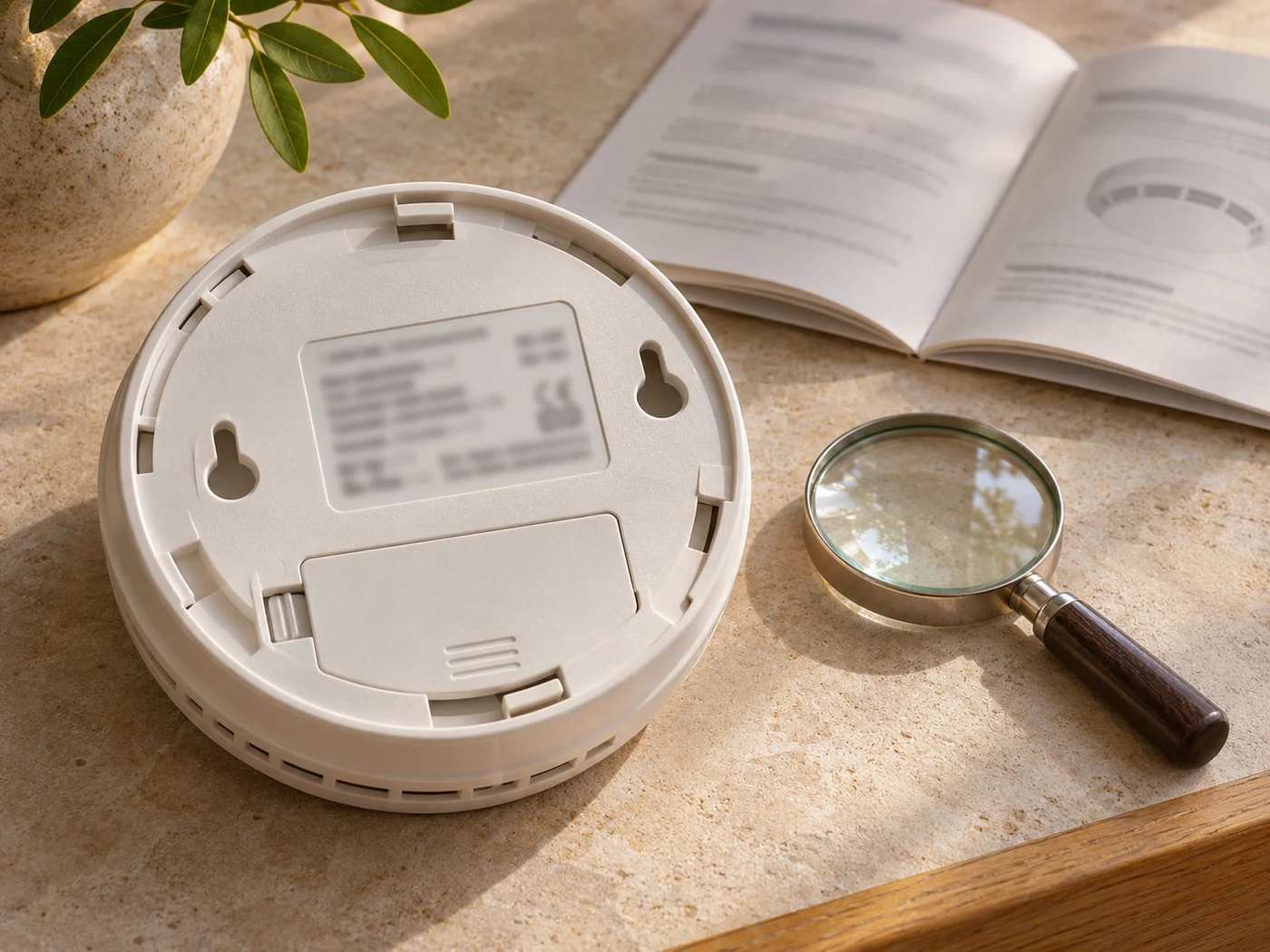
Check the date.
Smoke alarms: ten years from manufacture. CO alarms: check the product’s replacement guidance.
Read the detailsClose the details
Check the device’s age.
USFA says smoke alarms should be replaced ten years after their manufacture date. Look for that date on the device; a recent battery change does not make an old alarm new. Follow the manufacturer’s instructions for sealed-battery models. [1]
CO alarms have their own recommended replacement ages and end-of-life signals. Check the product literature instead of assuming every device follows the smoke-alarm timetable. [2]
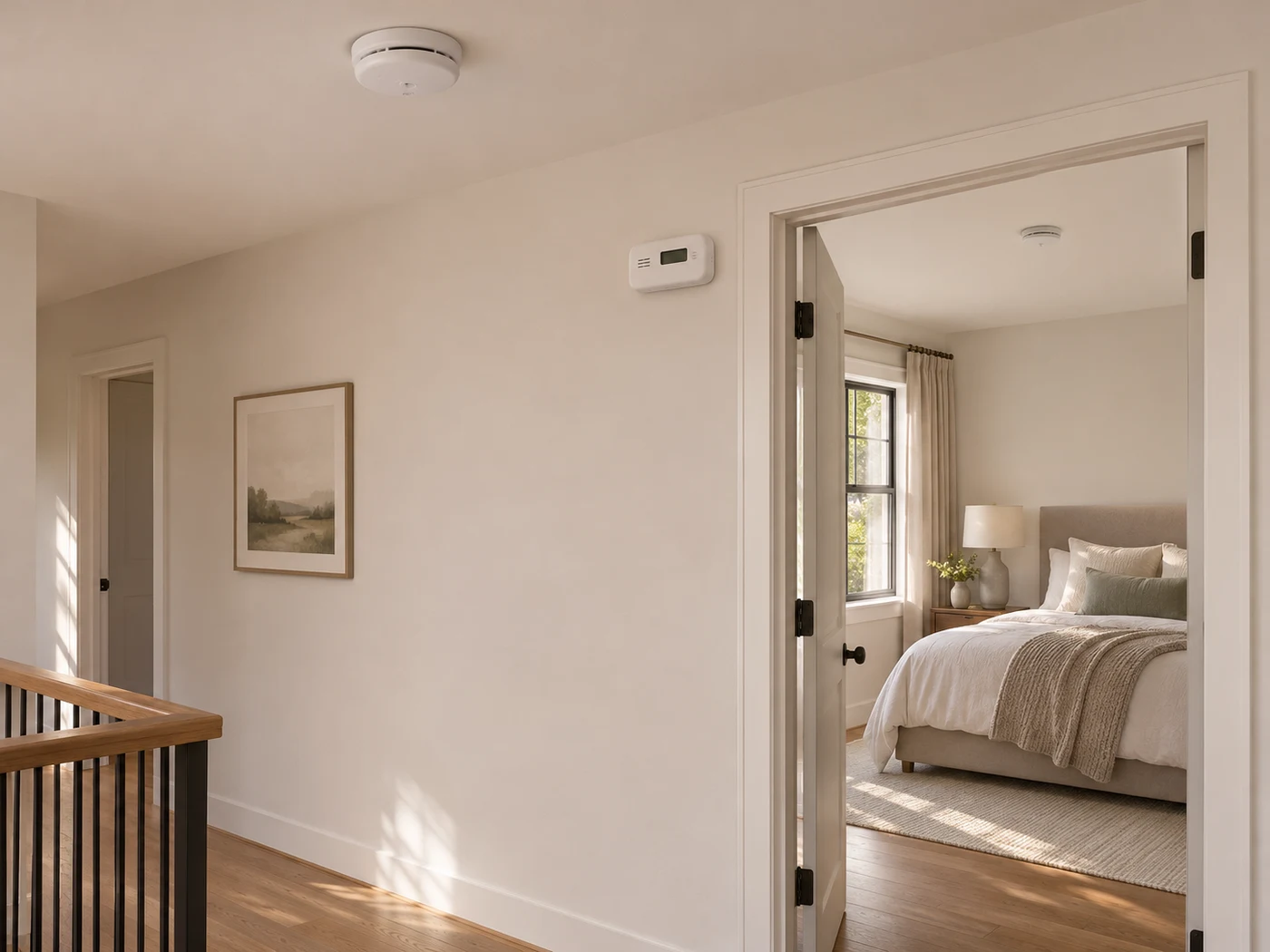
Check coverage.
Review bedrooms, sleeping-area halls and every level. Smoke and CO alarms have different roles.
Read the detailsClose the details
Review sleeping-area coverage.
USFA recommends smoke alarms in each bedroom, outside each sleeping area and on every level, including a basement. CPSC recommends CO alarms on every level and outside sleeping areas. Use the device instructions for placement. [1][2][3]
USFA recommends interconnected smoke alarms and says hardwired units should be installed by a qualified electrician. Ask your local fire marshal about requirements for your home and appropriate alert devices for household members with hearing loss. [1]
If an alarm warns of smoke or CO, get outside and call 911.
Full context
A practical home check: test smoke and carbon-monoxide alarms, check replacement dates and review coverage near sleeping areas. Use manufacturer directions and local requirements for your own home.
Turn the check into a simple plan.
For a home in Southlake, Flower Mound or Argyle, a useful next step is a short device list: location, manufacture or replacement date, and test result. Arrange qualified help for missing coverage or devices needing replacement. This is a planning suggestion, not a property-specific inspection.
If an alarm warns of smoke or CO, leave the home and call 911 from outside. For a CO emergency, do not go back in until responders say it is safe. [2][3]
All sources and image credits
Sources checked: . Recheck current information before making a decision.
- USFA: Smoke-alarm testing, age and placement
- CPSC: Carbon-monoxide alarms and replacement
- CPSC: Monthly checks and emergency response
Purpose-made editorial illustration, November 7, 2026. Generic devices and home; not an actual property, product endorsement or installation diagram. Follow manufacturer instructions. Opening image source
Purpose-made editorial illustration, November 7, 2026. Generic devices and home; not an actual property, product endorsement or installation diagram. Follow manufacturer instructions. Test monthly. image provenance
Purpose-made editorial illustration, November 7, 2026. Generic devices and home; not an actual property, product endorsement or installation diagram. Follow manufacturer instructions. Check the date. image provenance
Purpose-made editorial illustration, November 7, 2026. Generic devices and home; not an actual property, product endorsement or installation diagram. Follow manufacturer instructions. Check coverage. image provenance