
Home care ·
Find the quiet leaks.
Three simple checks. Useful clues before you call for help.
Explore the takeaways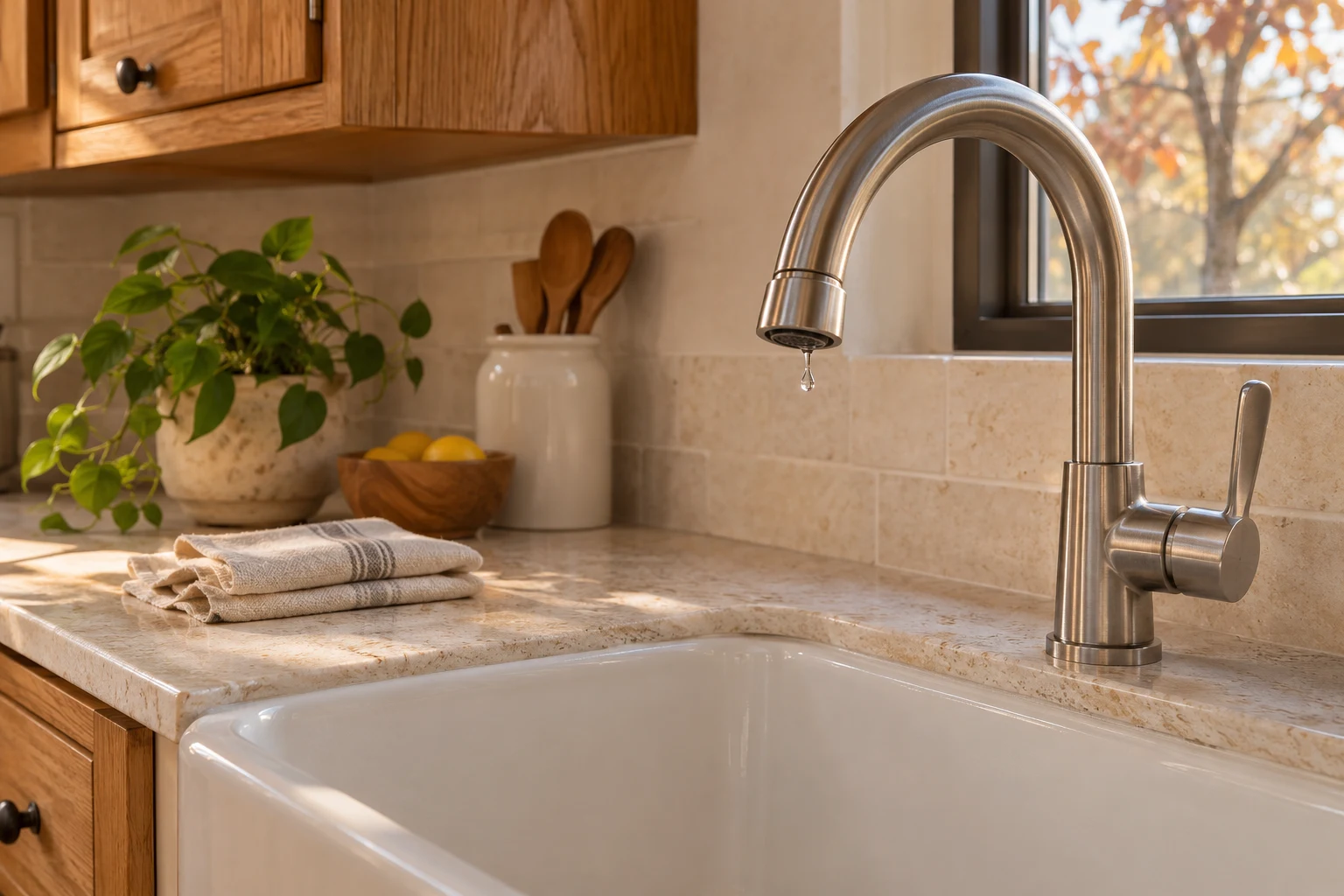
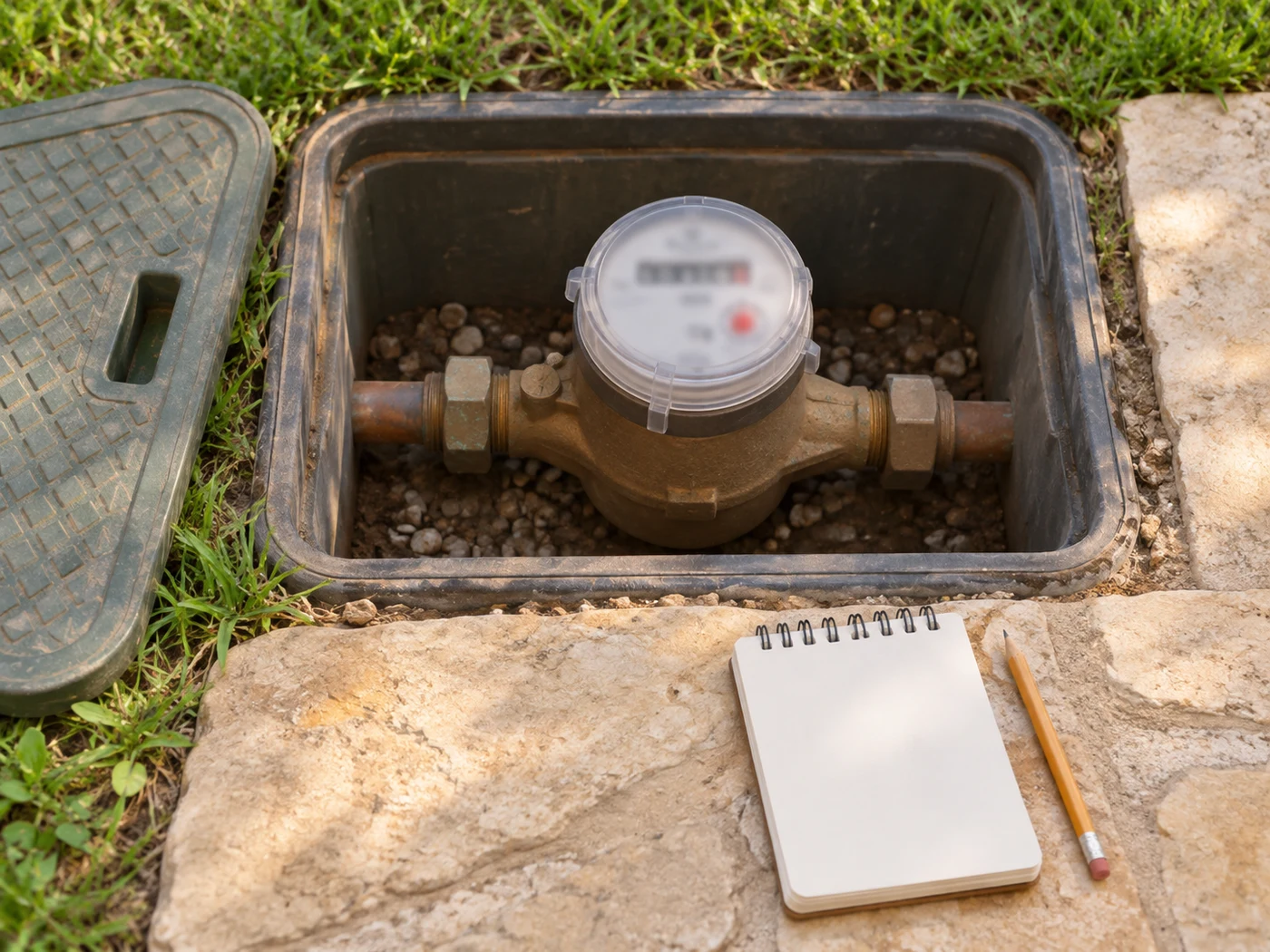
Two quiet hours.
Compare meter readings across two hours with no water use. A change can signal a leak.
Read the detailsClose the details
Give the meter a quiet interval.
EPA WaterSense suggests comparing your water-meter reading before and after two hours when no water is being used. If the reading changes, you probably have a leak. This is a clue to investigate, not a diagnosis of its location. [1][2]
For a useful comparison, household and automatic water users need to stay off throughout that interval. Note both readings and the times. If you cannot safely access or read the meter, ask your utility for guidance rather than disturbing equipment.
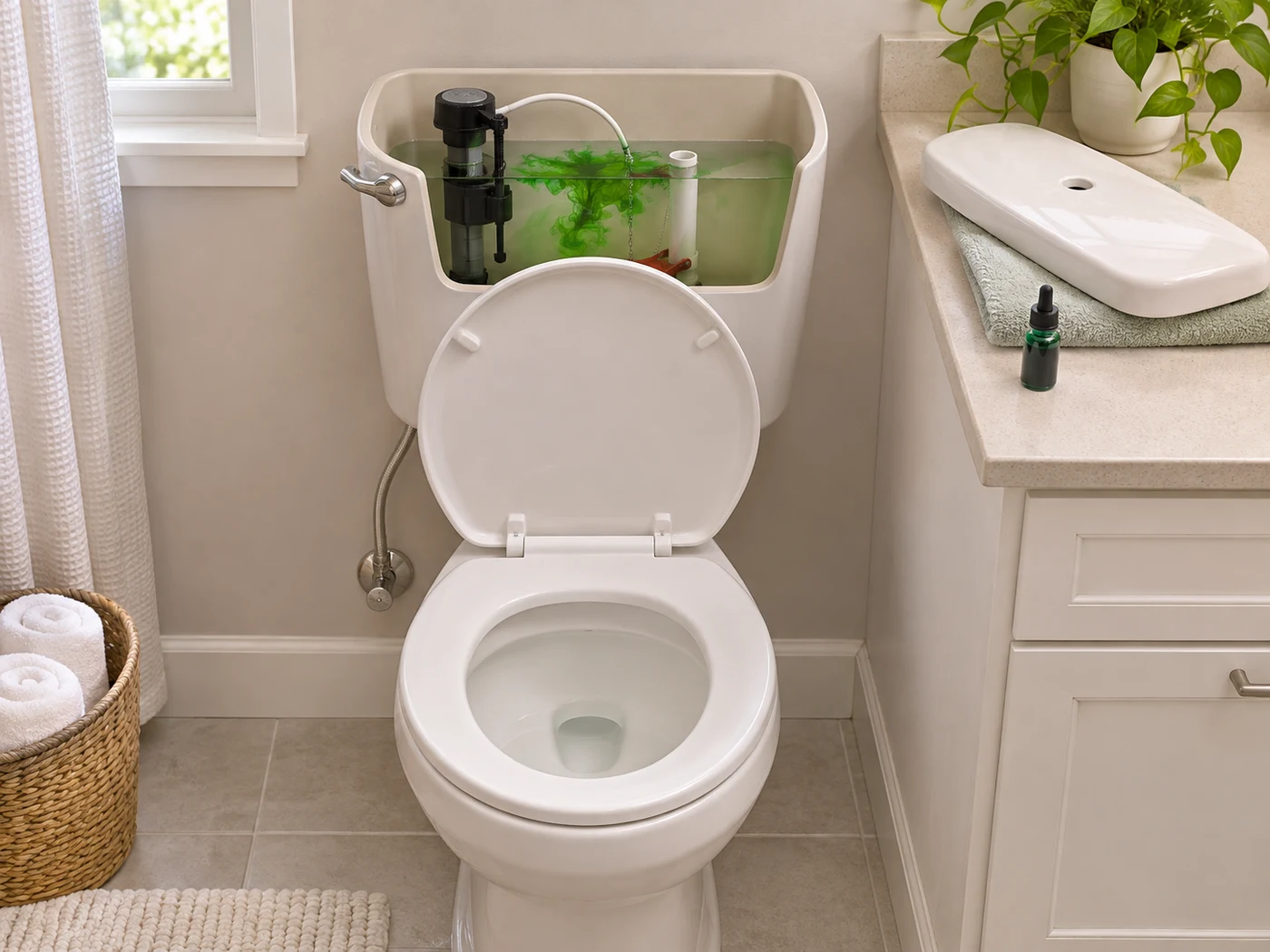
Ten-minute toilet test.
Dye goes in the tank. Color in the bowl after ten minutes means a leak; flush afterward.
Read the detailsClose the details
Check the toilet without flushing first.
Put a few drops of food coloring in the toilet tank. Leave it unflushed for ten minutes. If color appears in the bowl, EPA says there is a leak. Flush immediately after the check to avoid staining. [1][2]
The observation does not identify which part needs repair. Follow your toilet manufacturer’s directions or ask a qualified plumber for help if you are unsure. [1][2]
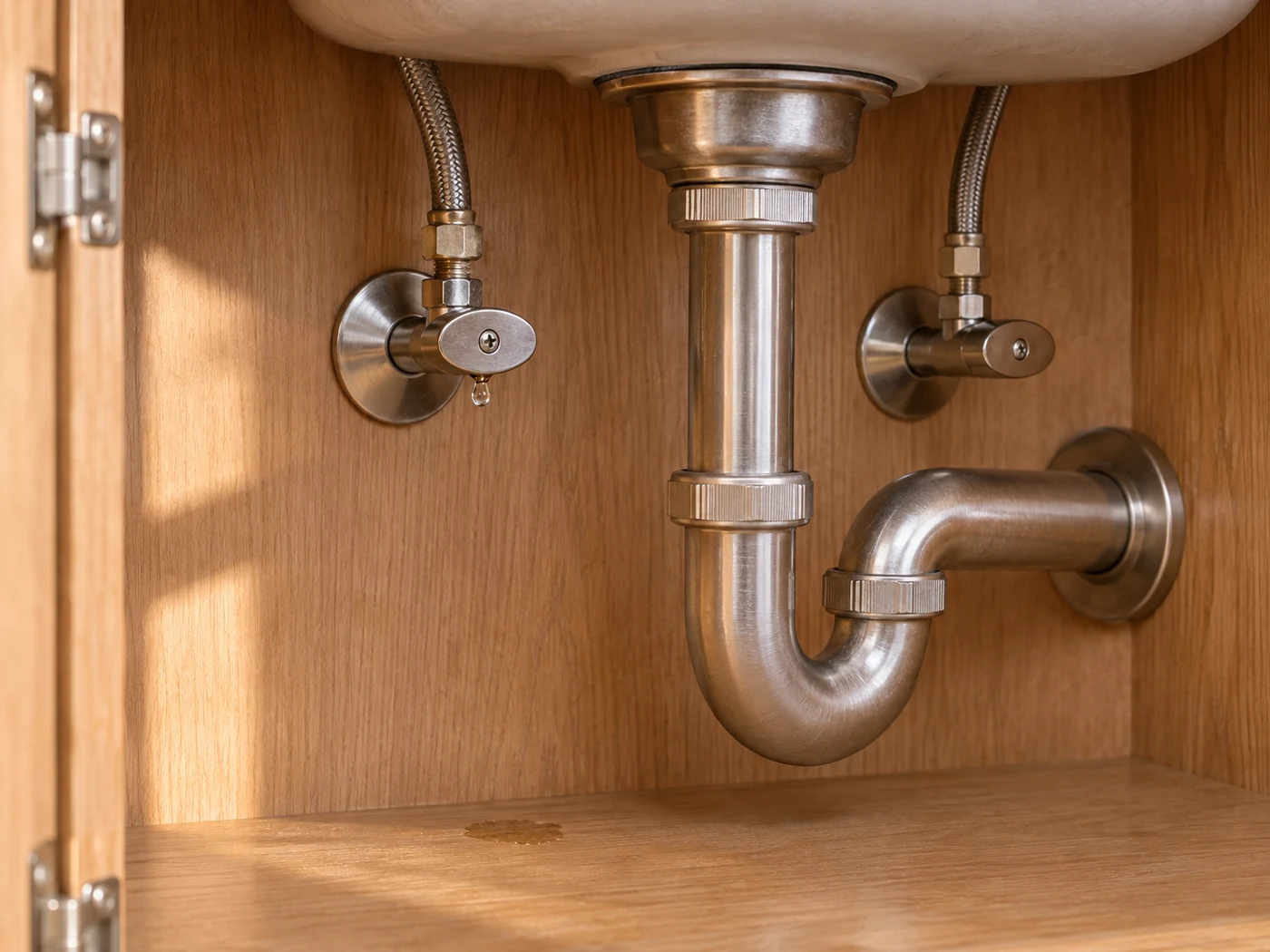
Look below the sink.
Drips, puddles or moisture at visible pipe connections deserve a closer look.
Read the detailsClose the details
Look where water should not be.
Listen for drips and look at visible pipe connections, especially beneath sinks. EPA recommends checking for puddles, water spots or water outside the pipe. Record what you see instead of assuming a damp mark has one particular cause. [1][2]
Keep the check visual. If an area is unsafe to reach or water is near electrical equipment, leave it alone and get appropriate help. These simple observations are not an instruction to dismantle plumbing.
Note what changed, then ask your utility or a plumber for help locating a suspected leak.
Full context
Three EPA-backed checks for a quiet household leak: compare a no-use meter reading, try a toilet dye test and look for visible moisture. Keep a note of what you find before seeking help.
Turn an observation into a useful next step.
For a home in Southlake, Flower Mound or Argyle, keep a short note of the time, location and reading or moisture you observed. Your own utility or a plumber can help you decide what to check next. Utility services and alert options vary; confirm what yours offers. [2]
These are year-round household checks, distinct from winterizing exposed plumbing. The illustrations are conceptual; they show neither a real home’s condition nor a measured result. No bill reduction or particular repair is promised.
All sources and image credits
Sources checked: . Recheck current information before making a decision.
Purpose-made editorial illustrations, November 9, 2026. Generic household scenes, not a named property, actual meter reading, diagnostic result or installation diagram. Opening image source
Purpose-made editorial illustrations, November 9, 2026. Generic household scenes, not a named property, actual meter reading, diagnostic result or installation diagram. Two quiet hours. image provenance
Purpose-made editorial illustrations, November 9, 2026. Generic household scenes, not a named property, actual meter reading, diagnostic result or installation diagram. Ten-minute toilet test. image provenance
Purpose-made editorial illustrations, November 9, 2026. Generic household scenes, not a named property, actual meter reading, diagnostic result or installation diagram. Look below the sink. image provenance